AI contract review tools are easy to find. Tools that genuinely support legal work are not.
While many platforms focus on high-volume, low-complexity reviews, legal teams handling negotiated, high-risk contracts need something very different. They need tools that understand context, preserve drafting intent, and work seamlessly inside familiar workflows.
This guide addresses that gap.
Below, we compare the best AI contract review software tools for legal teams, evaluating them based on real-world drafting and review workflows, depth of legal analysis, Microsoft Word integration, and suitability for complex legal work.
TL;DR
- AI contract review is about deep, contextual analysis, not bulk document scanning
- The best tools work inside Microsoft Word, where lawyers already draft and negotiate
- Definely is the best overall choice for complex contract drafting and review
- CLM platforms and NDA automation tools are a different category
Summary: Best AI Contract Review Software at a Glance
What Is AI Contract Review Software?
AI contract review software helps legal teams analyse contracts more accurately and efficiently while they are drafting, reviewing, and negotiating them.
In practice, this means supporting lawyers with tasks such as comparing clauses against precedent, identifying inconsistencies in language, flagging undefined or missing terms, highlighting potential risk areas, and understanding how a contract fits within a wider contractual framework. The strongest tools do this directly inside the contract, rather than through separate dashboards or reports.
Importantly, true AI contract review is not about scanning thousands of low-value contracts at once or producing portfolio-level analytics. It is about supporting legal expertise and helping lawyers work through long, complex, heavily negotiated agreements with greater speed, confidence, and accuracy, without removing legal judgment from the process. While portfolio-level analytics can be valuable for Legal Operations teams or General Counsel, they typically offer limited benefit to the lawyers doing the work and can sometimes be counterproductive, requiring additional data capture or pulling lawyers out of familiar drafting environments such as Microsoft Word.
AI works best when it is applied surgically, embedded into real drafting and review workflows, and focused on reducing manual effort while preserving control.
How to Choose the Best AI Contract Review Tool
Choosing the right AI contract review tool depends less on how much AI it claims to use and more on where and how that AI is applied. For legal teams working on complex contracts, the following criteria matter most.
1. Depth of Contract Analysis
The best tools operate at clause and definition level, not just document level. They should identify undefined or misused terms, surface inconsistencies in language, and support comparisons against precedent at the same granular level. For complex matters, the ability to review how provisions operate across multiple related documents is critical.
2. Native Microsoft Word Integration
Most legal drafting and negotiation still happens in Microsoft Word. Tools that work natively inside Word reduce context switching, minimise errors, and fit naturally into existing workflows. By contrast, non-native or browser-based platforms do not operate within Word itself and are built on separate codebases. As a result, they cannot fully replicate Word’s formatting, styles, or document behaviour, and instead rely on copy and paste processes that add friction and increase the risk of mistakes.
3. AI Transparency and Lawyer Control
AI should support legal judgement, not obscure it. Strong tools show why issues have been flagged, present suggested changes clearly, and allow lawyers to review and apply recommendations themselves. Transparency builds trust and makes adoption easier across teams.
4. Support for Complex, Negotiated Contracts
High risk contracts often involve master agreements, schedules, appendices, and shared definitions. Tools built for simple or high volume documents struggle in these environments. Look for software designed specifically for negotiated contracts with layered structures and commercial nuance.
5. Security and Deployment Flexibility
Legal teams in banking, government, energy, and other regulated sectors often require strict data controls. The ability to run software locally or within controlled environments can be a deciding factor, particularly where confidentiality and regulatory compliance are non negotiable.
The 6 Best AI Contract Review Software Tools in 2026
1. Definely
Best overall for complex contract review inside Microsoft Word
Overview
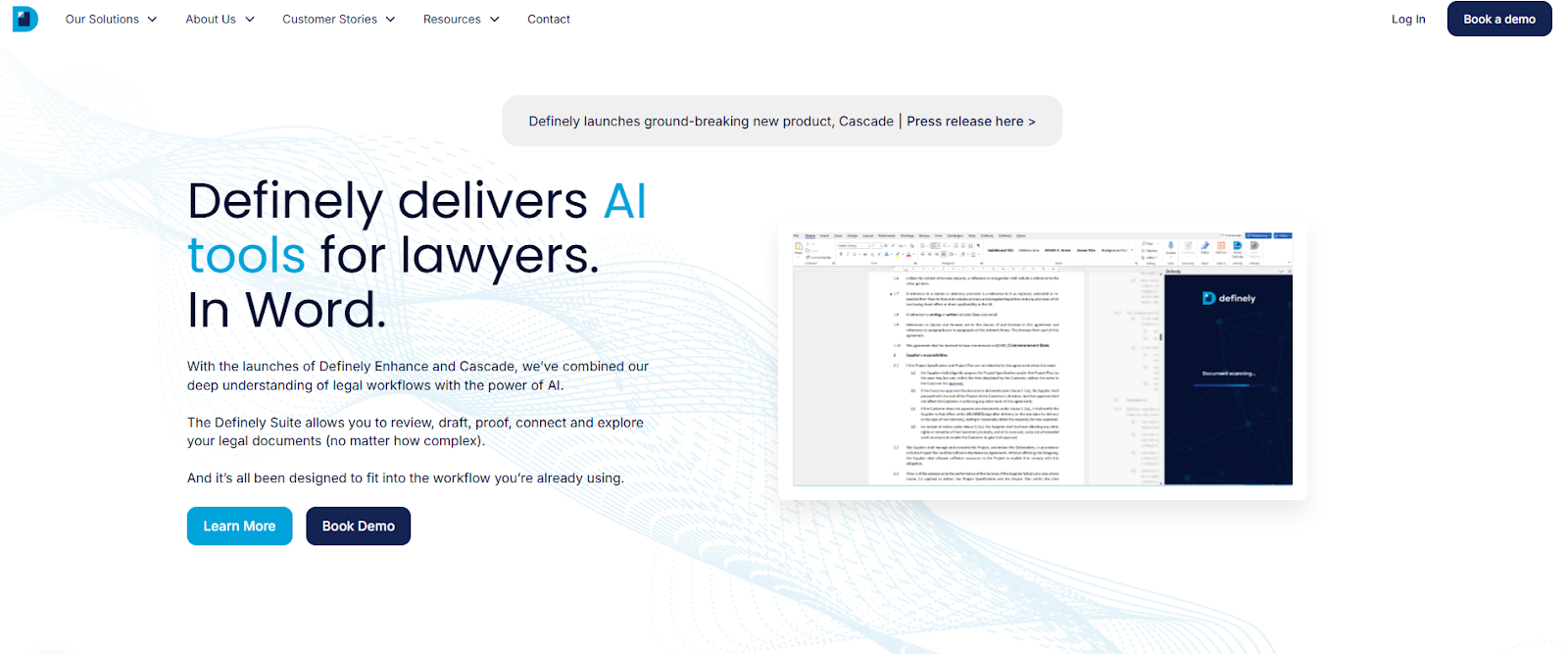
Definely is purpose built for lawyers who draft, review, and negotiate long, complex contracts. It works natively inside Microsoft Word and helps legal teams analyse clauses, definitions, schedules, and related agreements without leaving the document or breaking their drafting flow.
Rather than analysing contracts at scale, Definely focuses on improving accuracy and speed at the point where legal risk is highest, during active review and negotiation.
Key Features
- Clause and definition navigation across linked contracts
- AI-powered gap analysis to identify missing, inconsistent, or undefined terms
- Precedent comparison and clause retrieval from trusted internal documents
- Change-impact analysis that highlights where amendments affect related provisions
- Transparent AI suggestions presented as tracked markup inside Word
Why We Picked It
Definely applies AI in a targeted, workflow embedded way that reflects how lawyers actually work. By reducing manual navigation, comparison, and checking, it removes much of the cognitive load involved in reviewing complex agreements, while keeping lawyers fully in control of legal judgement and outcomes.
Pros
- Trusted by blue-chip companies for use on their most complex and nuanced contracts
- Deep, native integration with Microsoft Word
- Designed specifically for complex, negotiated contracts
- Strong accuracy through contextual analysis and explainable AI
- Suitable for regulated and security sensitive environments
Cons
- Not designed for high volume or low complexity contracts such as NDAs
- Enterprise-focused pricing may not suit very small teams
Pricing
Enterprise pricing, typically starting in the mid five figures per year, depending on modules, deployment model, and organisational requirements.
Ideal Use Cases
- Law firms handling transactional, corporate, and commercial work
- In-house legal teams reviewing complex supplier, finance, or sales agreements
- Legal teams in banking, infrastructure, energy, defence, and government sectors
Curious to see why companies like JP Morgan, Barclays and BT Group use Definely? Get in touch with our team to schedule your free, no-commitment demo today.
2. Litera
Best for large law firm drafting ecosystems
Overview
Litera is an established legal technology provider offering a broad suite of drafting, comparison, proofreading, and contract analysis tools. Its products are widely used by large law firms to support consistency, quality control, and standardised drafting and review workflows across teams.
Key Features
- Document comparison and proofreading tools
- AI-powered contract extraction and analysis
- Knowledge management and document management integrations
Why We Picked It
Litera is well suited to organisations that want an enterprise wide drafting and review ecosystem. It performs best where scale, standardisation, and firm wide adoption are priorities rather than deep, contract specific analysis.
Pros
- Widely adopted across large law firms
- Broad coverage across drafting and review workflows
- Integrates with common document management systems
Cons
- AI contract review tends to be higher level
- Less focus on contextual review across complex, linked agreements
- Broader, extensible product design means it can support many use cases, but with less focus on specialised workflows for complex, interrelated agreements
Pricing
Enterprise pricing, typically structured around multiple products and modules and often involving multi-year commitments.
Ideal Use Cases
- Large law firms standardising drafting and review processes
- Knowledge heavy environments focused on consistency and efficiency
3. DraftWise
Best for transactional precedent comparison
Overview
DraftWise is designed to help transactional lawyers analyse and compare contract clauses against precedent during drafting. It focuses on surfacing how similar provisions have been used in past deals, supporting consistency and informed decision making in transactional work.
Key Features
- Precedent based clause analysis
- Transaction focused insights drawn from prior agreements
- Integration with Microsoft Word
Why We Picked It
DraftWise performs well within a clearly defined use case. It is particularly effective for teams that want structured insight into how clauses are typically drafted in comparable transactions, without overhauling existing drafting workflows.
Pros
- Clear focus on transactional legal work
- Helpful precedent-driven insights during drafting
- Familiar Word-based workflow
Cons
- Limited functionality beyond precedent comparison
- Not designed as a full end-to-end contract review solution
Pricing
Mid range enterprise pricing, typically based on team size and data scope.
Ideal Use Cases
- Transactional legal teams focused on precedent analysis
- Firms looking to improve consistency across deal documentation
4. Harvey
Best for general legal AI assistance
Overview
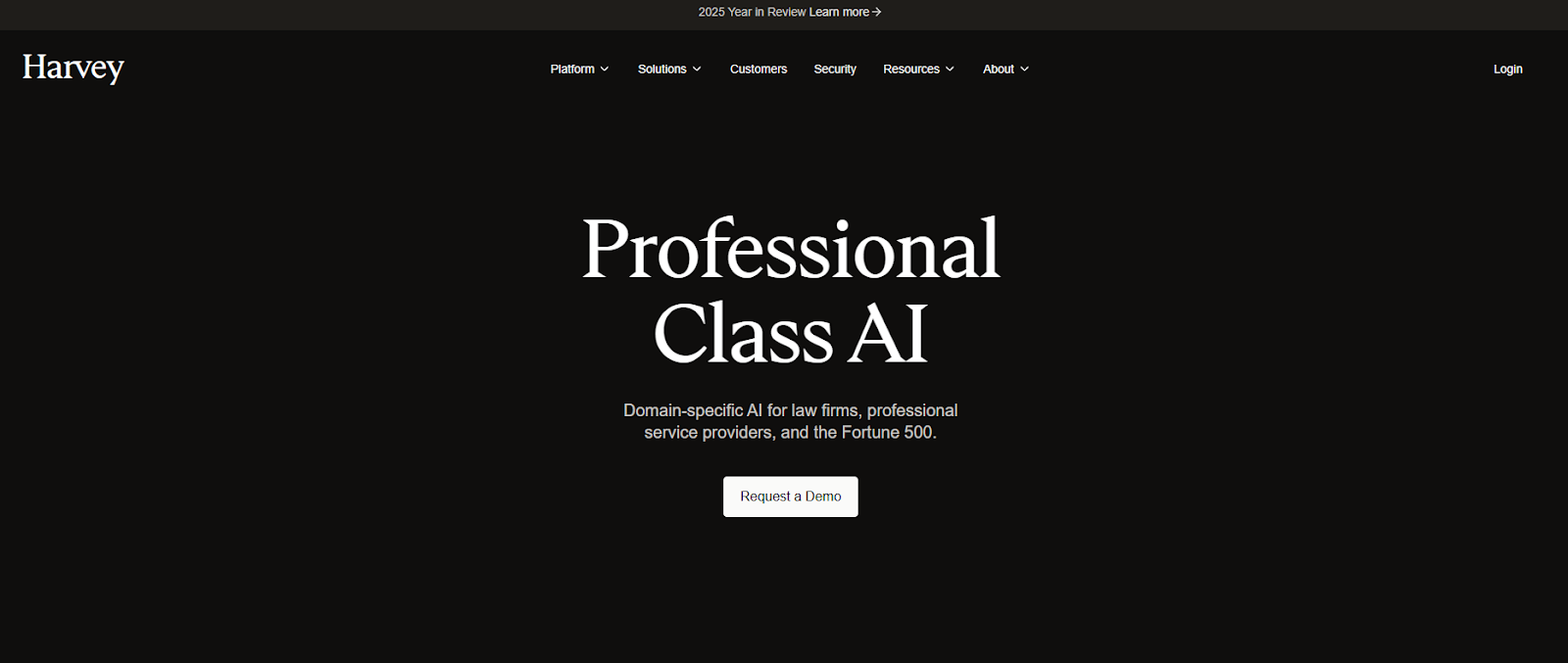
Harvey is a general purpose legal AI platform designed to support legal research, drafting assistance, and analysis across a wide range of legal tasks. It is used by law firms and in-house teams to accelerate knowledge work and exploratory legal queries.
Key Features
- AI powered legal research and summarisation
- Drafting assistance across multiple legal use cases
- Broad large language model capabilities
Why We Picked It
Harvey is a strong option for teams looking to introduce AI across research and drafting workflows. However, it is less specialised when it comes to in-document contract review and does not focus on clause level navigation inside Microsoft Word.
Pros
- Powerful AI models with broad legal applications
- Flexible across research, drafting, and analysis tasks
- Strong customer support and rapid iteration on new features
Pricing
Enterprise subscription pricing, typically based on organisation size and usage.
Ideal Use Cases
- Legal teams exploring general AI assistance
Firms seeking AI support for research and drafting tasks rather than detailed contract review
5. LexisNexis
Best for AI-enhanced legal research
Overview
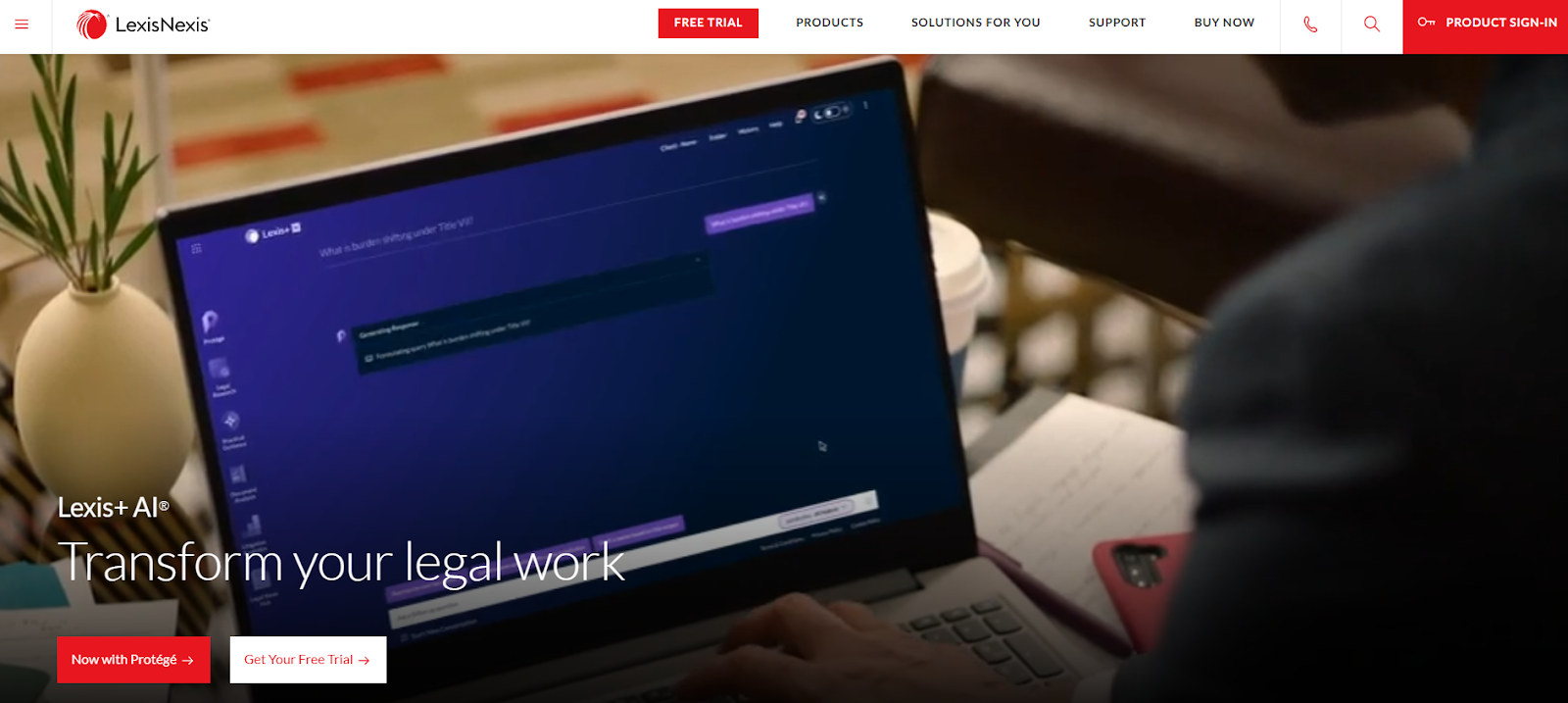
LexisNexis is a long established legal research provider that combines extensive legal content with AI-enabled research and drafting tools. Its AI capabilities are primarily designed to help lawyers find, understand, and apply legal information more efficiently, rather than to conduct detailed in-document contract review.
Key Features
- Extensive global legal content, including case law, legislation, and commentary
- AI-powered legal research and summarisation tools
- Drafting support linked to authoritative legal sources
Why We Picked It
LexisNexis excels where legal research accuracy and content depth are critical. While it offers AI features that support drafting and analysis, it plays a secondary role in hands-on contract review and is not designed to guide lawyers through complex agreements clause by clause.
Pros
- Highly trusted legal content and sources
- Strong AI-assisted research and analysis tools
- Widely adopted across law firms and in house teams
Cons
- Limited support for active contract review inside Microsoft Word
- Not built for navigating complex, multi-document contract structures
Pricing
Tiered subscription pricing based on content access, features, and user requirements.
Ideal Use Cases
- Research heavy legal teams
- Lawyers prioritising legal research and authority checking over contract-specific review workflows
6. Spellbook
Best for AI drafting suggestions
Overview
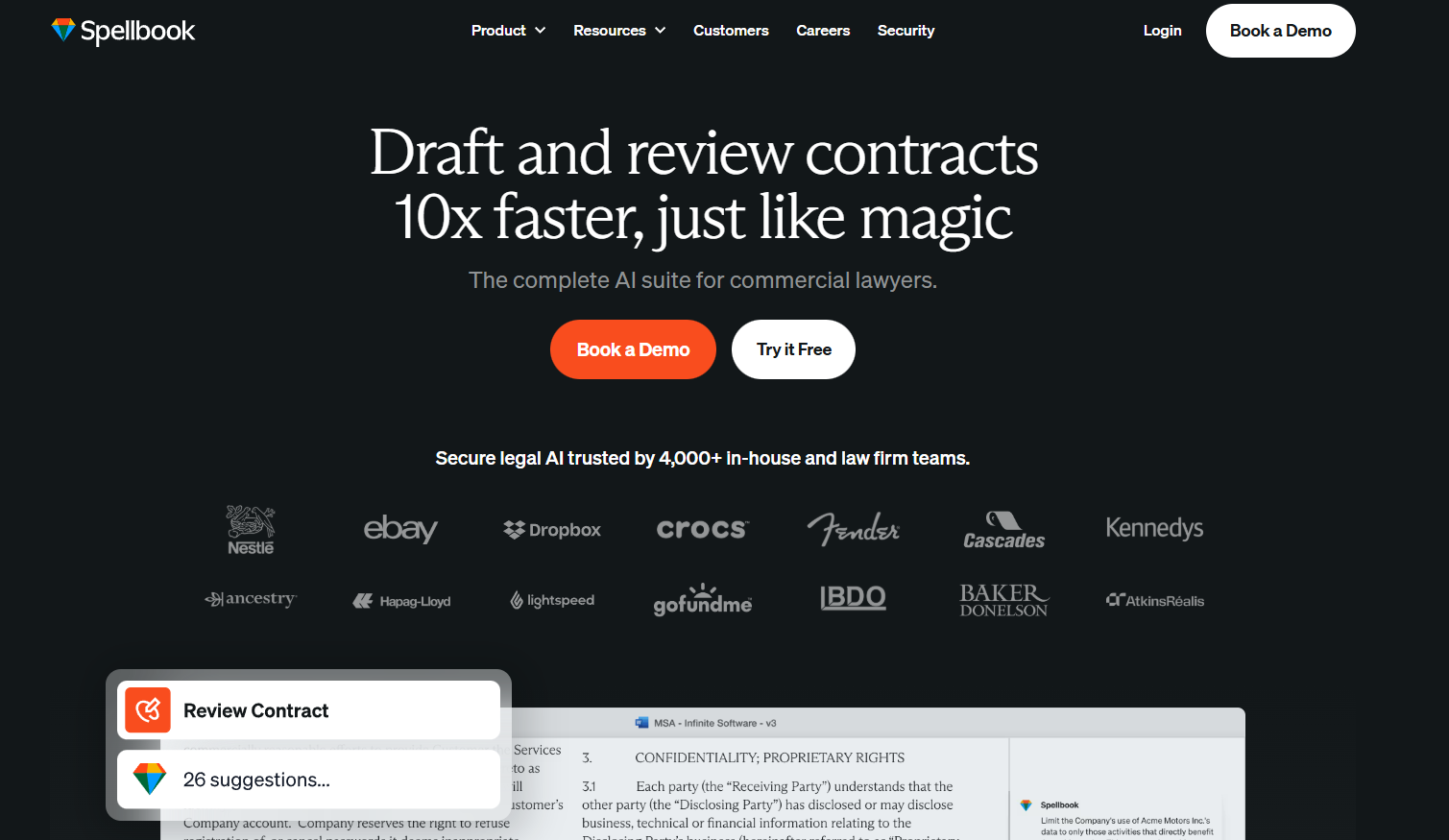
Spellbook is an AI-powered drafting tool designed to help lawyers generate and refine contract language inside Microsoft Word. It focuses on assisting with clause creation and wording suggestions rather than supporting full contract review workflows.
Key Features
- AI-generated clause suggestions
- Drafting prompts based on contract context
- Microsoft Word integration
Why We Picked It
Spellbook is useful for speeding up drafting tasks and exploring alternative languages. However, its functionality is centred on generation rather than deep analysis, making it less suitable for complex contract review.
Pros
- Easy to use with minimal setup
- Helpful AI prompts during drafting
- Well suited to high-volume, low-complexity drafting through playbooks and guided workflows
Cons
- Limited contract review and analysis capability
- Not designed for complex, negotiated, or multi-document agreements
Pricing
Lower cost subscription pricing compared to enterprise contract review platforms.
Ideal Use Cases
- Smaller legal teams seeking AI-assisted drafting support
- Lawyers looking for help generating or refining contract language rather than reviewing complex agreements
Definely vs Other AI Contract Review Tools
Definely takes a fundamentally different approach to AI contract review. Rather than offering general legal AI or standalone point solutions, it provides a complete drafting and review workflow built directly inside Microsoft Word and designed for complex, negotiated contracts.
Most alternative tools focus on a single layer of the problem. Some prioritise legal research. Others concentrate on drafting suggestions or precedent analysis. While these tools can be valuable in specific contexts, they often lack the depth required to review long, high-risk agreements that involve multiple documents, shared definitions, and tightly negotiated commercial terms.
For legal teams working on complex contracts, the ability to navigate, analyse, and understand agreements in context is more important than having the broadest possible AI feature set.
Why This Matters
Complex contract review is not a single task. It involves understanding how clauses interact, how definitions are used across documents, and how changes in one place affect risk elsewhere. Tools that only address one slice of this workflow can introduce new inefficiencies and blind spots.
Definely is designed for the reality of high stakes legal work, where precision, context, and control matter more than volume. By embedding AI directly into drafting and review workflows, it helps legal teams move faster without sacrificing accuracy or judgement.
Final Verdict
If your legal team reviews and negotiates complex contracts where accuracy, context, and risk matter, Definely is the best all round AI contract review solution in 2026.
It supports how lawyers actually work and applies AI where it delivers the most value.
Get started with Definely: Book a demo
AI Contract Review Software FAQs
How accurate is AI contract review compared to manual legal review?
AI contract review is most effective when it automates repetitive and error prone tasks while leaving legal judgement to the lawyer. By identifying inconsistencies, missing terms, and deviations from precedent, well designed tools can reduce issues that are commonly missed in manual review, especially in long or complex contracts.
What legal risks should teams consider when using AI contract review tools?
The main risks are over reliance on AI outputs and lack of transparency. Legal teams should use tools that clearly explain why issues are flagged and keep lawyers in control of final decisions. AI should support judgement, not replace it.
How does AI contract review improve contract negotiation outcomes?
AI contract review helps lawyers understand contracts faster and more accurately. By surfacing risk areas early, teams can focus negotiations on the points that matter most commercially, improving both speed and confidence at the table.
Can AI contract review handle multi document agreements and shared definitions?
Some tools can, but many cannot. Advanced contract review tools are designed to work across master agreements, schedules, and related documents, allowing lawyers to track shared definitions, cross references, and the impact of changes across an entire contract structure.
How long does it take to implement AI contract review software?
Implementation depends on the tool and deployment model. Software that works natively inside Microsoft Word and integrates with existing systems can often be adopted quickly, while deeper knowledge and precedent integrations take longer but deliver greater long term value.
How do knowledge teams and precedents influence AI contract review quality?
High quality internal precedents are essential. When AI tools are grounded in curated firm or company knowledge, reviews become more accurate, consistent, and relevant. Knowledge teams play a central role in maintaining this foundation.
How should legal teams measure ROI from AI contract review?
ROI goes beyond time savings. Legal teams often see value in improved accuracy, reduced review errors, faster negotiation cycles, and lower risk exposure, particularly in complex or high stakes contracts.
Who typically owns the decision to buy AI contract review software?
In law firms, decisions are usually led by knowledge, innovation, or IT leaders with partner input. In house, the General Counsel or Legal Operations team typically owns the decision, often working with procurement and IT.
.png)